Running a travel agency involves much more than booking flights and hotels. Travel businesses handle customer inquiries, tour packages, reservations, payments, follow-ups, and changing travel schedules every day. Managing all these activities manually can become challenging, especially when the business starts growing. This is where a Travel Agency CRM becomes an essential tool.
A travel agency CRM (Customer Relationship Management) is software designed to help travel businesses organize customer information, manage sales leads, track bookings, and improve communication. Instead of keeping important details in spreadsheets, notebooks, or multiple applications, agencies can manage their daily operations from one centralized platform.
Whether you operate a small travel agency, an online travel business, or a large tour operation, the right CRM system can make your workflow more organized and efficient.
What Is a Travel Agency CRM?
A Travel Agency CRM is a digital management system that helps travel professionals maintain customer relationships and organize business activities.
It stores important information such as customer contact details, travel preferences, previous bookings, destination interests, payment records, and communication history.
For example, when someone contacts your agency about a holiday package, your CRM can help you record their requirements, assign the inquiry to a sales representative, prepare a quotation, and schedule follow-ups.
This organized approach makes it easier to manage potential customers and provide a consistent customer experience.
Why Does Every Travel Agency Need CRM Software?
Customer expectations in the travel industry continue to change. Travelers want quick responses, personalized recommendations, transparent pricing, and convenient booking experiences.
Without proper management software, important inquiries can get lost, follow-ups may be delayed, and customer information can become difficult to track.
Here are some reasons why travel agencies benefit from CRM software:
1. Manage Customer Information Easily
A travel CRM keeps customer information organized in one place. Travel agents can access contact details, previous bookings, travel preferences, and special requests without searching through multiple files.
Having a complete customer profile also helps agencies understand their clients better and provide more personalized travel recommendations.
2. Track Travel Leads and Inquiries
Generating inquiries is important for every travel business, but converting those inquiries into confirmed bookings is equally important.
CRM software allows agencies to track leads from different sources, including websites, social media, email, phone calls, and referrals.
Sales teams can monitor each lead’s progress, identify interested customers, and follow up at the right time.
3. Simplify Booking Management
Managing multiple customer reservations can become complicated without a structured system.
A travel agency CRM can help organize booking details, including:
-
Customer and passenger information.
-
Travel destinations and itineraries.
-
Flight and hotel reservation details.
-
Tour package selections.
-
Booking confirmation status.
-
Payment and outstanding balance records.
This makes it easier for travel agents to monitor bookings and reduce administrative mistakes.
4. Improve Customer Communication
Good communication builds trust and encourages repeat business.
With CRM software, agencies can maintain communication records and schedule reminders for important activities, such as sending quotations, confirming reservations, sharing travel updates, and requesting customer feedback.
Some CRM platforms also offer email integration, messaging tools, and automated notifications.
5. Increase Sales and Customer Retention
A successful travel agency does not depend only on new customers. Returning clients and referrals can also contribute significantly to business growth.
CRM systems help agencies identify previous customers, understand their travel interests, and offer relevant vacation packages or seasonal promotions.
For example, a customer who previously booked a family vacation may be interested in another holiday package during the next school break.
Essential Features of Travel Agency CRM Software
Not all CRM systems offer the same features. Before choosing software for your travel business, consider the tools that will support your daily operations.
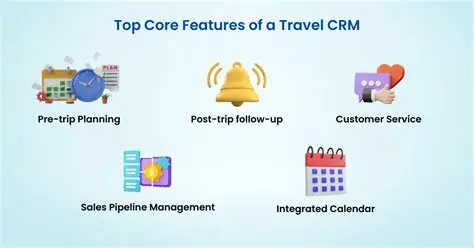
Lead Management: Collect, organize, assign, and track customer inquiries from different marketing channels.
Customer Database: Store customer profiles, contact information, travel preferences, and booking history.
Booking Management: Monitor reservations, itineraries, passenger details, and booking statuses.
Quotation and Invoice Management: Prepare professional travel quotations, invoices, and payment summaries.
Follow-Up Reminders: Schedule reminders so your sales team does not miss important customer interactions.
Sales Pipeline: Track inquiries from the initial contact to quotation, negotiation, and confirmed booking.
Reporting and Analytics: Review sales performance, lead conversion rates, booking trends, and business activity.
Team Management: Assign tasks and responsibilities to different employees while maintaining better workflow visibility.
Automation: Automate repetitive activities, such as follow-up reminders, notifications, and selected customer communications.
How Travel Agency CRM Helps Grow Your Business
Implementing CRM software can improve different areas of a travel agency’s operations.
Imagine receiving 50 travel inquiries in a single day. Without an organized system, tracking every customer’s requirements and following up with everyone can take considerable time.
With a CRM, your team can organize all 50 inquiries, assign them to sales representatives, record customer requirements, and monitor their progress.
Managers can also review which inquiries are converting into bookings and identify areas where the sales process needs improvement.
Over time, these insights can help agencies make better business decisions, improve customer service, and manage growth more effectively.
How to Choose the Best CRM for a Travel Agency
Choosing the right CRM requires understanding your business requirements.
Before purchasing a system, consider the following factors:
-
Easy to use: Select software that your employees can learn and use without extensive technical training.
-
Travel-specific features: Look for lead tracking, booking management, quotations, and customer databases.
-
Automation capabilities: Choose tools that reduce repetitive administrative work.
-
Customization: Make sure the software can support your agency’s services and business processes.
-
Data security: Check access controls, backups, and customer data protection features.
-
Integration options: Consider whether the CRM connects with your website, email, accounting tools, or booking platforms.
-
Scalability: Choose a system that can support your business as your customer base and team grow.
It is also a good idea to request a product demonstration or free trial before making a final decision.
Travel Agency CRM vs. Traditional Management
Traditional management often relies on spreadsheets, paper documents, phone records, and separate applications. Although these methods may work for a small number of customers, they can become difficult to manage as operations expand.
A CRM offers a more centralized approach.
Instead of manually checking several files, employees can access customer information, sales activities, and booking updates through one system.
This can improve team coordination, reduce missed follow-ups, and provide managers with a clearer picture of business performance.
Future of CRM in the Travel Industry
Technology is changing how travel businesses operate. Automation, artificial intelligence, cloud-based platforms, and digital communication tools are becoming increasingly important.
Modern travel CRM platforms are evolving to support smarter lead management, personalized customer experiences, automated communication, and data-driven business decisions.
Travel agencies that adopt suitable digital tools can become better prepared to respond to changing customer expectations and market competition.
Frequently Asked Questions (FAQs)
1. What is a Travel Agency CRM?
A Travel Agency CRM is software that helps travel businesses manage customer information, inquiries, bookings, sales activities, and customer relationships from one platform.
2. Which CRM is best for a travel agency?
The best CRM depends on your business size, budget, and requirements. Look for features such as lead management, booking tracking, customer databases, automation, reporting, and integration capabilities.
3. Can CRM software manage travel bookings?
Yes. Many travel-focused CRM platforms allow agencies to organize booking information, customer details, itineraries, reservation statuses, and payment records.
4. Is CRM suitable for small travel agencies?
Absolutely. Small travel agencies can use CRM software to organize customer inquiries, manage follow-ups, improve communication, and build stronger customer relationships.
5. How does CRM help travel agents increase sales?
CRM helps travel agents track potential customers, manage sales pipelines, schedule follow-ups, understand customer preferences, and identify opportunities for repeat bookings.
6. Is cloud-based CRM useful for travel agencies?
Yes. Cloud-based CRM systems allow authorized employees to access business information through supported devices and internet connections, making remote work and team collaboration easier.
Final Thoughts
A Travel Agency CRM is more than just a customer database. It is a valuable business tool that helps travel companies organize inquiries, manage bookings, improve communication, and build long-term customer relationships.
As competition in the travel industry grows, having an organized management system can give agencies a practical advantage. By choosing CRM software that matches their business needs, travel agencies can simplify everyday tasks, improve productivity, and create better experiences for their customers.
Investing in the right CRM today can help build a more organized, customer-focused, and scalable travel business for tomorrow.